
Phia & Fashion Tech’s Reality Check
What Phia can teach us about big seed rounds, consumer behavior, and the value of constraint.


*Disclosure: I published this piece just before Bloomberg published its second investigative report on Phia’s affiliate scandal*
I went all in on Cloud Closet in 2024, leaving my job in fintech to finally put my thoughts into action and build a different vision for social commerce, one that wasn’t owned by Meta, TikTok or influencers. My perspective on fashion tech had been shaped by a decade inside the retail fashion industry (TJ Maxx/Marshalls, Gap Inc., Sears, LVMH, Louboutin), a deep fascination with how technology would change ecommerce, and an awareness of the handful of thoughtful consumer products beginning to emerge in fashion tech.
At the time, the space was still pretty quiet. Indyx and Whering had launched around 2020 with really solid approaches to digital wardrobes. I loved what Kristine was building at Locker and found her founder story inspiring. Kate at Beni was tackling secondhand shopping in a way that felt genuinely differentiated and helpful.
Summer 2025 seemed to change everything. While Tucker (my co-founder) and I were bootstrapped, literally with our backs against the wall, one AI app after the next entered the scene with blockbuster funding.
Alta: $15M around digital wardrobes and avatars.
Daydream: $50M around AI shopping.
Doji: $15M around avatars and virtual try-on.
Phia: $35M positioning itself as the “Google Flights for shopping.”
There was no denying that we were Davids surrounded by Goliaths. We weren’t going to win over consumers with ad spend, headlines or paid placement. We had to get hyper specific about who we were building for, but that’s a story for a different day.
It was refreshing to see investors give fashion tech another shot after years of products that didn’t take off. AI’s advancements had made the category exciting again for VCs. But as these massive rounds came together, I couldn’t help but think everyone was overestimating the role AI would play. It’s never been cheaper to build software. Anyone can build anything now. In consumer fashion tech tools, where almost no one has cracked true mass adoption, the moat isn’t the technology but rather brand, community, product format, and a hyper-specific go-to-market strategy. More importantly, I think it’s an obsessive understanding of consumer behavior and the problem you’re trying to solve.
AI might have been the sexy thing to pitch in 2025, but it was also starting to give consumers the ick.
And with those massive raises came fierce competition. Suddenly, everyone was chasing the same consumer. But the companies with the biggest rounds were also chasing something else: venture-scale returns. And nowhere has that tension played out more publicly thank with Phoebe Gates and Phia.

The Phia Effect
When I first saw Phia enter the scene, I kind of just rolled my eyes. There was something deeply ironic about the whole thing. It was hard to separate the company from the extraordinary access and resources its 22-year-old founder, Phoebe Gates, brought with her. I rolled my eyes harder when I saw concepts that looked remarkably similar to what teams at Beni and Locker had spent years building. Then came the Phia podcast, the incessant ads, the celebrity investor roster. I kept thinking, well... obviously.
Of course you have this investor list. Given that kind of access, raising money isn’t particularly interesting as an achievement. Presenting an idea with conviction and convincing people to bet on you is one thing. Presenting that same idea with one of the most recognizable last names in the world is another.
Then came the affiliate attribution controversy reported by Bloomberg. Whether it was intentional almost became beside the point for me. The mechanics of what happened felt less surprising than the incentives behind it. We had watched Honey face similar accusations around affiliate attribution in 2025. Phia wasn’t operating in uncharted territory. The warning signs were already there.
Do I think Phoebe Gates and her team are sinister? No. But they are young, relatively inexperienced founders/operators who raised an extraordinary amount of capital at a valuation reportedly approaching $185 million. And when your revenue depends on taking a small percentage of transactions, that kind of valuation requires an enormous amount of volume to process through your product.
As Ali Kriegsman put it:
“To me, Phia’s affiliate-driven model faced critical, structural headwinds to delivering a 10x return to their investors. Because at an average 5% commission, Phia needs to drive $1B to $2B in Gross Merchandise Value (GMV) annually through its links to justify a venture-scale valuation.”
That, to me, is the more interesting part of the story. A giant valuation is simultaneously a signal of success and an obligation to produce a giant outcome. And when the economics of the business require enormous scale to get there, those expectations shape how a company grows.
Watching fellow founders talk about the revenue they believe they lost as a result of Phia’s attribution practices, including Nabiha at SSQRD, felt strangely familiar. Massive seed rounds, aggressive growth expectations and founders scrambling to make the numbers work. These aren’t new stories out of Silicon Valley. Fashion tech is apparently just growing up.
What Happened to the Art of Constraint?
Part of my initial skepticism around Phia was really about something bigger: constraint.
Constraint is one of the main ingredients in what breeds a great startup. Not because struggling is inherently noble, but because having less forces clarity. This is especially true for startups, but it also helps to make great humans.
It’s why the traditional founder story is filled with failures, pivots, firings (!), scraping together enough money for a prototype, pouring your life savings into the business and trying desperately to get anyone to care. Those experiences don’t just make for a better founder story, they shape the founder, and eventually, the product.
In that sense, Phia represents almost the inverse. I had an idea. I wanted to build something. I picked up the phone and got money. There is nothing inherently wrong with having access to capital. But capital can remove some of the early friction that forces young companies to figure out what they really are.
A week after the Bloomberg exposé, Phia announced its Virtual Closets feature. I thought Phia strikes again. Another feature, another adjacent category, another expansion of what the company might become. Competition, pivoting and copying all happen in startups. But there is a difference between evolving from a deeply held conviction and assembling a billion-dollar story in real time.
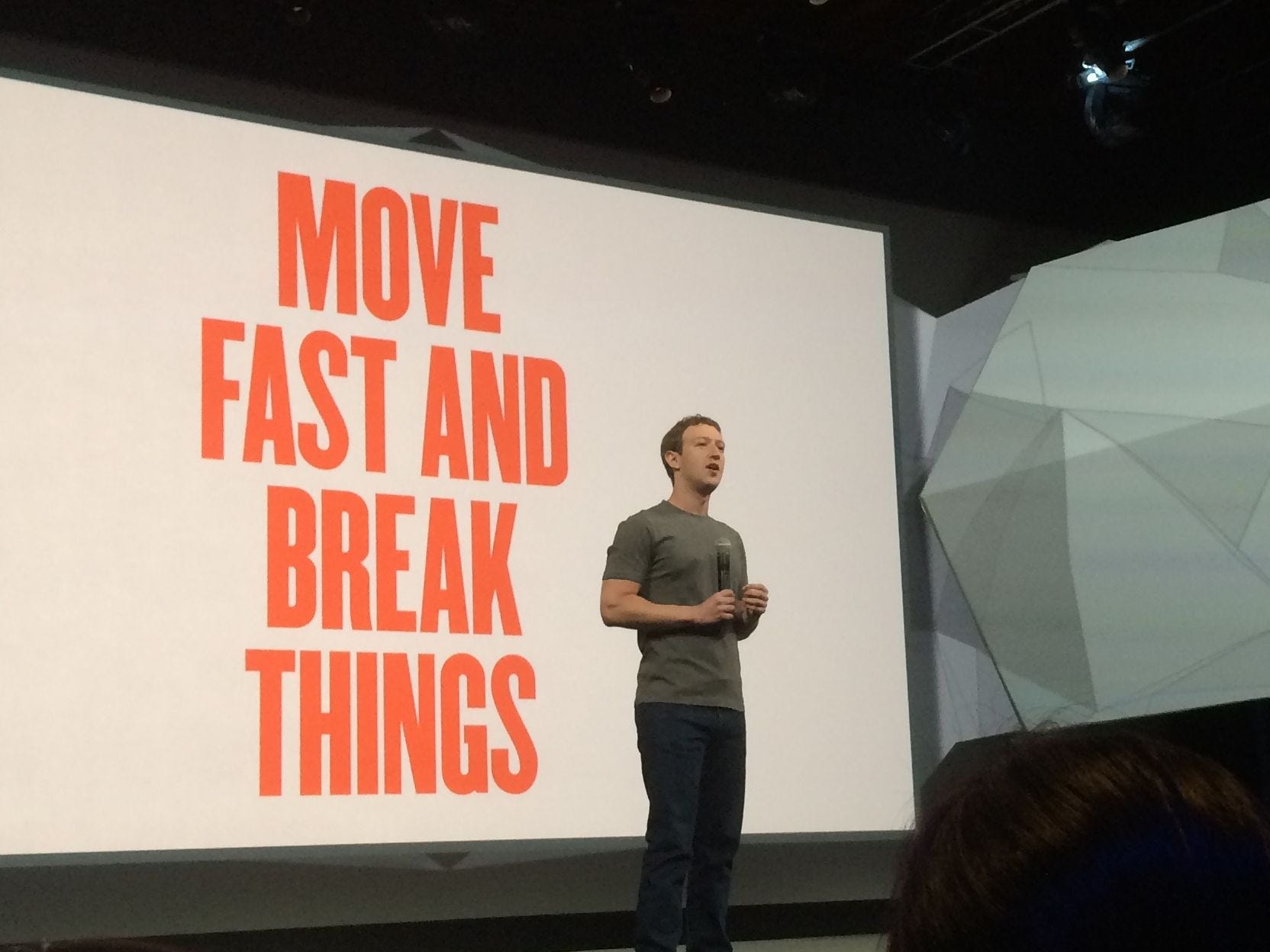
In some ways, this may be Phia’s first real encounter with constraint. Getting called out publicly over consumer trust, at a moment when trust matters more than ever, is brutal for any company. The difference is that this setback came $35 million later.
But beyond Gates’ piece of the Phia story, I think fashion tech itself may be entering a period of constraint. Over the next 24 months, I expect less hype, less money before real traction, and a lot more pressure to prove what consumers actually want. With or without AI.

Fashion Tech’s Funding Thesis?
The category has exploded with capital and attention, but increasingly, the products are starting to look remarkably similar. Photograph everything in your closet. Let AI analyze it. Optimize your style. Avatar try-on for you. There is something distinctly tech-bro about trying to optimize a part of human behavior that may not need optimizing in the first place.
And that tension matters particularly in fashion tech, an industry with largely female founders operating in a venture ecosystem where raising capital is already disproportionately difficult for women. High-profile missteps invite more scrutiny, not less, and inevitably affect how investors look at the category and the founders coming up behind them.
Maybe my skepticism also comes from how I arrived here. I’ve spent my career studying consumer behavior in one form or another, first through merchandising and retail, later through building customer journeys in fintech and business development, and now as a founder building in fashion tech in my 30s. My journey has made me much more interested in building around how people already behave than using technology to tell them how they should.
I recently read a piece from 1752 VC called The $100M Pre-Seed Problem. They argue that “the most dangerous thing you can hand a pre-seed founder is $50 million. Not because they’ll waste it, but because it removes the one thing that reliably produces breakthrough thinking: a back against the wall.”
You can’t manufacture demand and buy your audience’s attention indefinitely. You can’t keep adding features working for other businesses and call it product-market fit for yours.
There’s no denying this scenario will make an already difficult fundraising environment even harder for founders who aren’t cisgender men. But maybe this whole Phiasco ends up being useful for fashion tech by forcing us to rethink how we build. Higher expectations for real traction—for everyone, no matter your background, or pedigree. More pressure to prove people actually want what we’re building. And hopefully, less incentive to cut corners to meet venture returns.
Consumers and communities can see through the BS anyway.
Curious of your thoughts.

I love this! In the world of try AI try-on platforms I am building Trulfuenz where real stylists(fahsion influencers) virtually style their followers via 1:1 virtual styling sessions. And yes I have my back against the wall!
Impeccable take!! Reminds me of the book The Lean Startup that was every founder's bible 10 years ago. I feel like AI has made people think they can just skip ahead to the part where they have a billion dollars in revenue and they are in for a rude awakening.